


Raw meat is the hardest thing to wrap. It is wet, fatty, and goes into cold rooms where film turns brittle. Most cling film complaints trace back to three decisions: wrong gauge, wrong temperature, wrong film for the job. None of them are the film's fault.
Baoding Yashen Technology Co., Ltd., a manufacturer of food-grade PVC wrap and PVC products since 2013, has published a practical guide for meat processors and packers on choosing and using PVC cling film. The guide covers film construction, gauge selection, wrapping practice, machine settings, cold-room pitfalls, and the compliance documents that should arrive with every pallet.
Short answer. Wrap meat at 0–4 °C, never warm. Match the gauge to the packing method. Use each piece once. Ask for the declaration of compliance before you order.
What the film is actually made of
PVC cling film is plasticised PVC, 8–20 µm thick. The cling does not come from an adhesive. It comes from plasticiser and additives migrating to the surface.
That is also why the grade matters when the food is fatty.
Cast film is clear, quiet, and thin. It clings well, and it suits hand wrapping and display. Blown film is tougher and slightly hazier. It suits heavy trays and machine wrapping.
Ask which plasticiser is used. DEHA and DOTP are common in food grades. Phthalate plasticisers have no place in a film that touches raw meat.
Why raw meat is the hard case
♦Migration rises with fat, contact time, and temperature. Raw meat brings all three: surface fat, hours in storage, cold rooms.
♦Keep the meat at 0–4 °C. Keep direct contact under 24–48 hours. Freezing slows migration but does not stop it, and cold makes film brittle.
♦Film is a cover, not a barrier. It slows moisture loss. It does not stop oxygen, so it will not hold colour the way vacuum or MAP does.
Which gauge to specify
Application Gauge Type Why
Hand wrap, bowls, small cuts 8–10 µm Cast Best clarity, lowest cost per metre
Tray wrap on a machine 12–15 µm Cast or blown Balances stretch and tear strength
Cold room, heavy cuts 15–20 µm Blown Survives corners and bone
Freezer, short term 12 µm and up Blown Must be rated for freezing
A 10 µm film weighs about 13 g/m², so a 1 kg roll covers roughly 75 m². When a quote comes in 20% cheaper, check the net weight and gauge before checking the price.
How to wrap, step by step
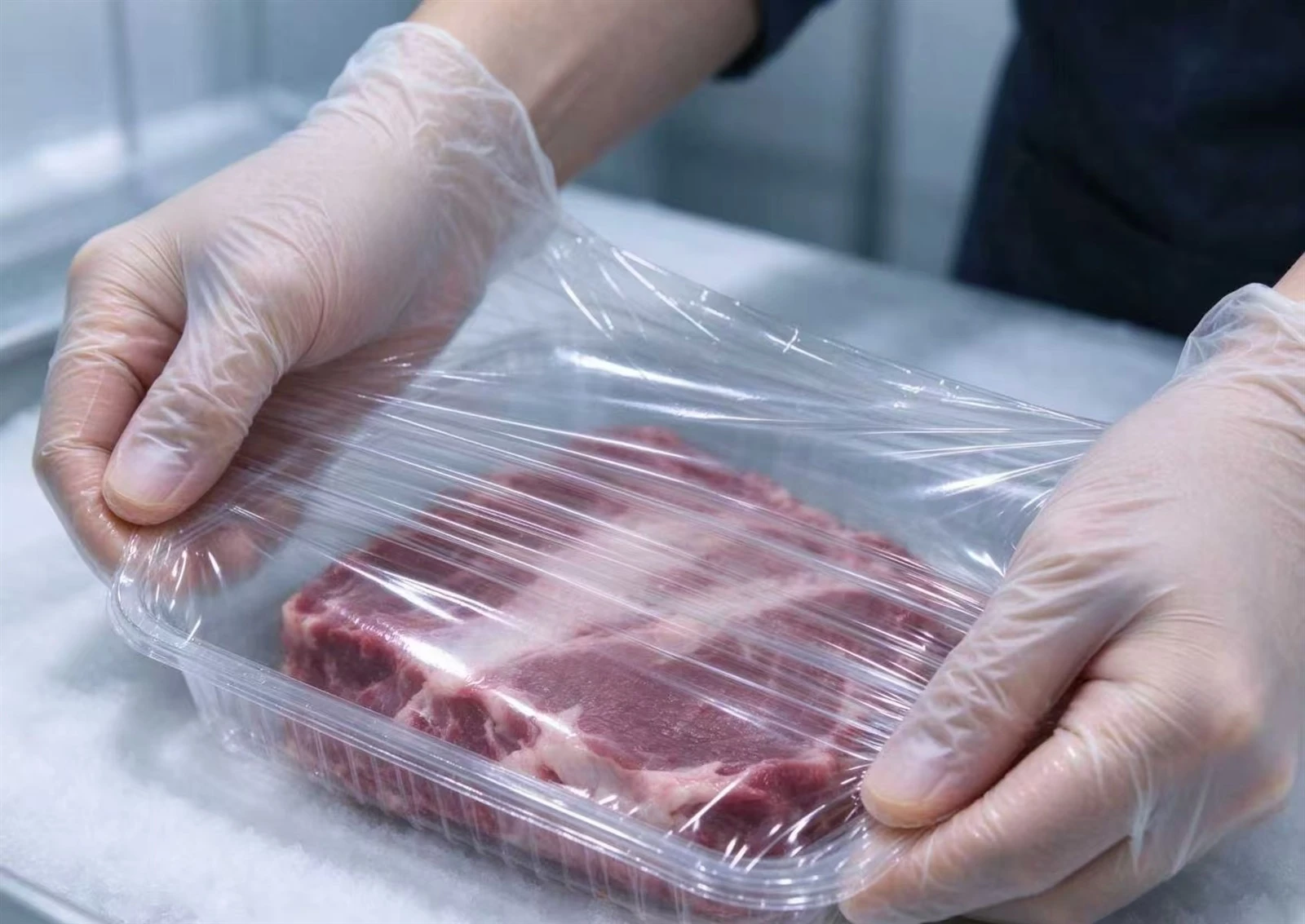
♦ Chill first. 0–4 °C. Never wrap warm meat.
♦Dry the surface. Free liquid becomes condensation under the film.
♦Work from one end; keep the film taut, two or three turns.
♦Press the film to itself at the seam, not into the meat.
♦Label with date and time.
♦Put packs on a tray. Do not stack them on each other.
Machine settings that matter
1. Pre-stretch. Keep it between 150% and 250%. Beyond that, the film necks down, tears at the tray corner, and loses cling.
2. Brake tension. Just enough to hold the pack. Over-tensioned film crushes soft packs and springs back at the seam.
3. Film width. Clear the tray diagonal by 50–80 mm. A 300 mm roll on a 250 mm tray leaves the corners open.
4. Test roll. Run one before you commit to a pallet. Film behaves differently at 4 °C than it does on the line.


Where cold-room practice goes wrong
♦Condensation. Warm meat fogs the film from the inside, and that water sits against the surface. Let meat reach temperature first.
♦Airflow. Packs stacked tight stay wet. Leave space between them.
♦Bone. A sharp edge under tension punctures film within hours. A pinhole is an open door.
Never do this
Never Why
Wrap warm or hot meat Migration climbs quickly above 40 °C
Microwave in contact with fatty food Unless the film is rated for it
Reuse a piece of film Cross-contamination, no exceptions
Freeze long term in standard film It goes brittle and punctures
Leave rolls on the bench PVC absorbs fumes, odours and solvents
Tear the film by hand Ragged edges leak and look careless
Storing the rolls
♦Keep them at 5–25 °C, dry, off the floor, in the carton. Cold rolls tear and lose cling.
♦Keep them away from bleach and degreasers. The film absorbs the vapour, and the smell transfers.
♦One roll per station. Wash hands before handling.
Documents that should come with the pallet
Document What it proves
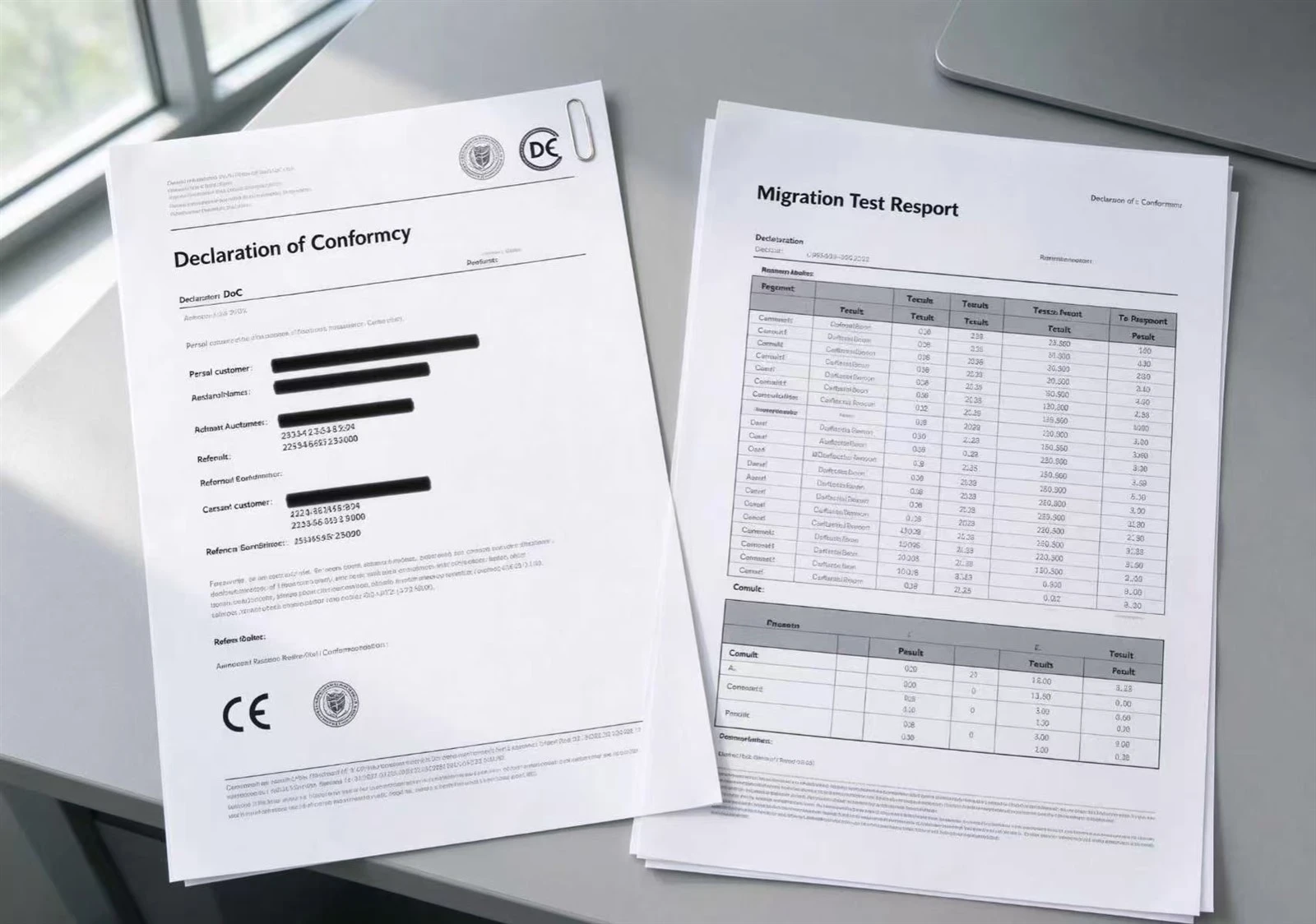
Declaration of compliance The film meets EU 10/2011 and BfR III, or holds an FDA letter
Plasticiser identity and migration data What migrates, and how much. DEHA carries an SML of 18 mg/kg in the EU
Gauge tolerance and net weight What you paid for is what arrives
Freezer rating The working temperature range, in writing
Batch number Traceability if a customer complains
REACH SVHC statement: No restricted substances above threshold
FAQ
Can I freeze meat in cling film?
Short-term, days, not months. For longer storage, use a freezer-rated film or vacuum packing.
Does cling film stop bacteria?
No. It slows moisture loss and cross-contamination. Temperature is what controls growth.
Why does meat go brown under the film?
Oxygen and temperature. Film is not a barrier. Brown-grey colour is myoglobin changing, not spoilage on its own.
Is thicker film better?
No. It costs more, and some machines handle it worse. Match the gauge to the job.
About Baoding Yashen Technology Co., Ltd.
Baoding Yashen Technology Co., Ltd. started in 2013 in Baoding, Hebei.
We make PVC curtain strips, PVC sheets, food-grade PVC wrap, and phenolic rods, and we also build the machines that make them and develop custom formulas.
Our exports carry CE, FDA, RoHS, and REACH certifications and ship to over 100 countries across Southeast Asia, Europe, North America, South America, and the Middle East.
We are a manufacturer, not a trading company. Website: [https://www.yashenchina.com/]


