


Ozone is a highly reactive gas composed of three oxygen atoms (O₃). It exists in the Earth's atmosphere, both in the stratosphere, where it forms the ozone layer protecting us from harmful ultraviolet radiation, and at ground - level as a pollutant. Ground - level ozone is a key component of smog and is produced through complex chemical reactions between nitrogen oxides (NOₓ) and volatile organic compounds (VOCs) in the presence of sunlight.
As a PVC sheet supplier, I often get asked about the ozone resistance of our products. PVC, or polyvinyl chloride, is a widely used thermoplastic polymer known for its versatility, durability, and cost - effectiveness. Our PVC sheets are used in a variety of applications, from Folding Board Flip Fold Clothes Folder to High Temperature Resistance Waterproof PVC Marble Tablecloth and Stamped PVC Soft Tablecloth.
Understanding the Chemistry of PVC and Ozone
To determine whether PVC sheets are resistant to ozone, we need to understand the chemical nature of both substances. PVC is made up of long chains of vinyl chloride monomers. These chains are relatively stable under normal environmental conditions. However, ozone is a powerful oxidizing agent. Its reactivity comes from the fact that it has an extra oxygen atom that can break chemical bonds in other substances.
When ozone comes into contact with PVC, it can initiate oxidation reactions. The double bonds and other reactive sites in the PVC polymer chains are potential targets for ozone attack. Oxidation by ozone can lead to several changes in the PVC material. It can cause the polymer chains to break, resulting in a loss of mechanical properties such as tensile strength and flexibility. Additionally, ozone oxidation can lead to surface cracking, discoloration, and a general deterioration of the PVC sheet's appearance and performance.
Factors Affecting the Ozone Resistance of PVC Sheets
The ozone resistance of PVC sheets is not a fixed characteristic and can be influenced by several factors:
Additives
One of the most important factors is the presence of additives in the PVC formulation. Many PVC products, including our sheets, contain stabilizers, antioxidants, and UV absorbers. These additives can play a crucial role in enhancing ozone resistance. Stabilizers, for example, can react with the ozone before it attacks the PVC polymer chains, effectively protecting the material. Antioxidants work by scavenging free radicals generated during the oxidation process, preventing further degradation.
Environmental Conditions
The concentration of ozone in the environment is a significant factor. In areas with high levels of air pollution, where ozone concentrations can be relatively high, PVC sheets are more likely to experience ozone - related damage. Temperature and humidity also play a role. Higher temperatures can accelerate the chemical reactions between ozone and PVC, while high humidity can affect the diffusion of ozone into the material.
Thickness and Surface Finish
The thickness of the PVC sheet can influence its ozone resistance. Thicker sheets generally have more material to withstand ozone attack, and the inner layers may be better protected from the ozone. The surface finish of the sheet can also matter. A smooth surface may be less prone to ozone - induced cracking compared to a rough or porous surface, as it provides less area for ozone to penetrate.
Testing the Ozone Resistance of PVC Sheets
At our company, we conduct rigorous testing to evaluate the ozone resistance of our PVC sheets. One common test method is the ozone chamber test. In this test, samples of the PVC sheets are placed in a chamber filled with a controlled concentration of ozone. The temperature and humidity inside the chamber are also carefully regulated to simulate real - world conditions.
The samples are then observed over a period of time for any signs of degradation, such as surface cracking, discoloration, or changes in mechanical properties. We measure the tensile strength, elongation at break, and other mechanical parameters before and after the ozone exposure to quantify the extent of damage.
Based on our test results, we have found that our PVC sheets with appropriate additives can exhibit good ozone resistance under normal environmental conditions. However, in areas with extremely high ozone concentrations, such as industrial areas with heavy air pollution, some degradation may still occur over time.
Applications and Ozone Resistance
The ozone resistance of PVC sheets is an important consideration in different applications. For indoor applications, such as the Stamped PVC Soft Tablecloth, the ozone concentration is generally low, and the PVC sheets are less likely to be affected by ozone. However, for outdoor applications, like some types of signage or protective covers, ozone resistance becomes a critical factor.
Our High Temperature Resistance Waterproof PVC Marble Tablecloth used in outdoor settings, for example, needs to withstand not only high temperatures and water but also the potential damage from ozone. By formulating our PVC sheets with the right additives and conducting proper testing, we ensure that they can meet the requirements of these demanding applications.
Improving Ozone Resistance
To further enhance the ozone resistance of our PVC sheets, we are constantly researching and developing new formulations. We are exploring the use of advanced stabilizers and antioxidants that can provide better protection against ozone. Additionally, we are looking into surface treatments that can create a barrier between the PVC and the ozone.
One approach is to apply a thin layer of a protective coating on the surface of the PVC sheet. This coating can act as a physical barrier, preventing ozone from reaching the underlying PVC material. Another strategy is to optimize the manufacturing process to ensure a more uniform distribution of additives throughout the PVC sheet, maximizing their effectiveness.
Conclusion
In conclusion, while PVC sheets are not inherently completely resistant to ozone, with the right formulation and additives, they can exhibit good ozone resistance under normal environmental conditions. As a PVC sheet supplier, we are committed to providing high - quality products that meet the needs of our customers in various applications.

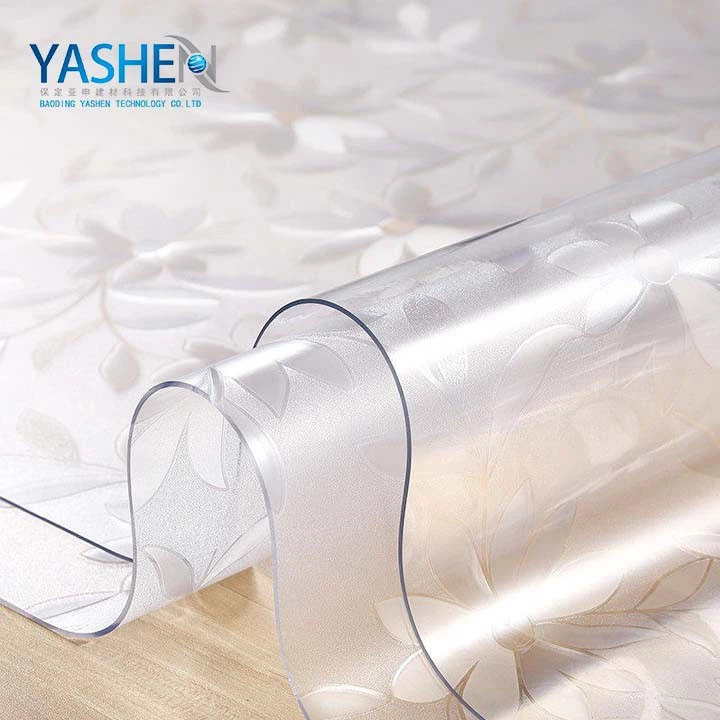
Whether you are looking for a Folding Board Flip Fold Clothes Folder, a High Temperature Resistance Waterproof PVC Marble Tablecloth, or a Stamped PVC Soft Tablecloth, our PVC sheets are designed to offer durability and performance.
If you are interested in purchasing our PVC sheets or have any questions about their ozone resistance or other properties, we encourage you to contact us for a detailed discussion. We look forward to working with you to find the best PVC solutions for your specific requirements.
References
- ASTM D1149 - Standard Test Method for Rubber Deterioration—Surface Cracking in an Ozone - Containing Atmosphere
- "Polyvinyl Chloride (PVC) Handbook" by Charles A. Daniels
- Research papers on polymer oxidation and ozone degradation from scientific journals such as Polymer Degradation and Stability.